
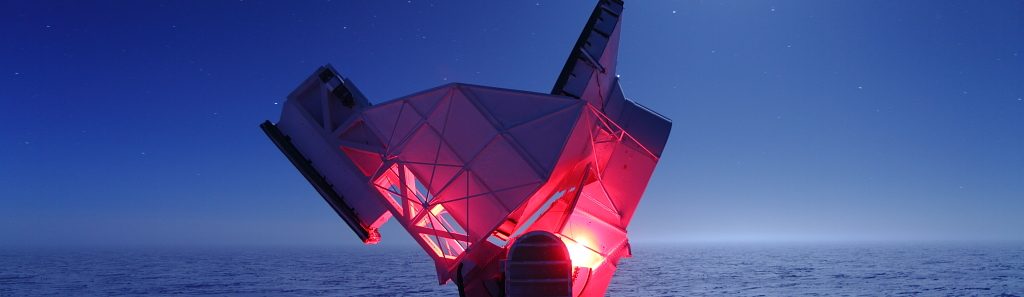
Fermilab’s cosmic research program explores the fundamental nature of matter, energy, space, and time, as revealed in the unique natural laboratory of the cosmos.
Surveys of galaxies and cosmic background radiation use precise measurements of cosmic structure to learn about fundamental physics of cosmic acceleration, new forms of gravitating matter, and properties of cosmic neutrinos. A coordinated campaign of experiments seek to directly detect and study the properties of dark matter particles in the laboratory. Development of new technology, both ultra-sensitive detectors and advanced computational algorithms, will enable the next generation of discovery.
The Fermilab Cosmic Physics Center (CPC) hosts Fermilab’s cosmic research program and fosters interactions between the lab and the larger the cosmic physics community. We invite you to join the adventure, a high-energy, cosmic journey: learn about who we are, the science we’re focused on, and how you can be a part of it.
Highlights
The Fermilab CPC is partnering with Adler Planetarium to host its 8th annual Dark Matter Day event! This year Dark Matter Day will be held at Adler Planetarium on Wednesday, October 28th from 5PM-9PM. Videos from some past Dark Matter Day events can be found here: Fermilab Dark Matter Day 2024 Fermilab Dark Matter Day… More »
Join us for the Cosmic Physics Jamboree on October 12th from 12PM-2PM in Curia 2.
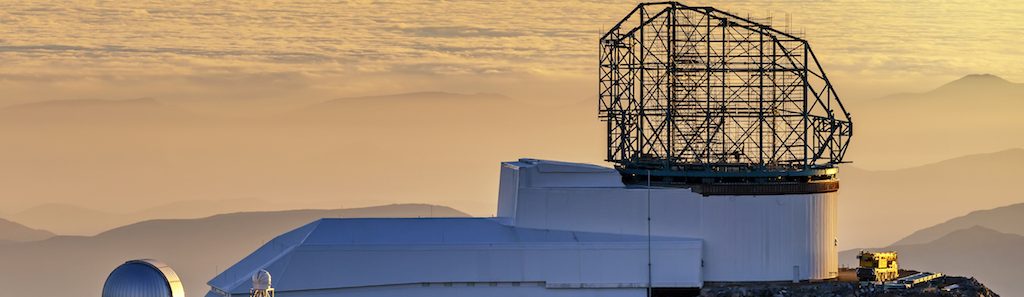
On the night of June 29, 2026 the Vera C. Rubin Observatory formally began the Legacy Survey of Space and Time. For the next 10 years, Rubin will observe the entire observable southern sky every few nights to create an ultra-wide, ultra-high-definition time-lapse movie of our Universe. This long-awaited milestone is the culmination of years… More »
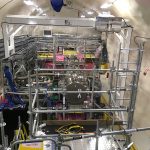
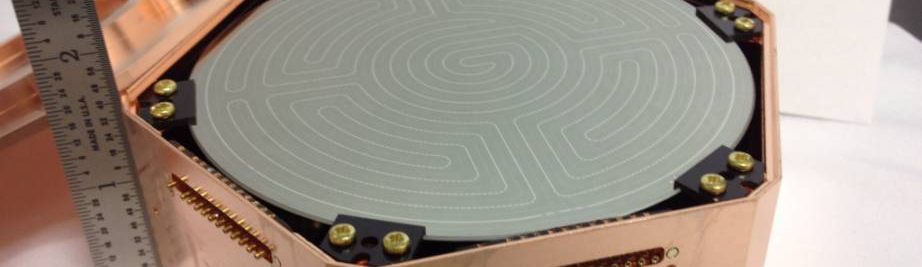
The SuperCDMS SNOLAB dark matter experiment completed installation and initial cool down underground at SNOLAB in Sudbury, Canada. SuperCDMS SNOLAB is now preparing to start commissioning and data taking, with the target of detecting light dark matter candidates. Fermilab led the design and fabrication of the SuperCDMS SNOLAB cryogenic system, the warm electronics and associated… More »